Gurgaon has developed into a major commercial real estate market, supported by corporate offices, retail destinations, residential catchments and growing demand for organised shopping and business spaces. For investors exploring commercial property, one option worth understanding is a pre-leased commercial property.
Unlike a vacant shop that still needs a tenant, a pre-leased property already has a tenant under an existing lease agreement. This can offer greater visibility into the property's current rental income, lease duration and contractual terms before making a purchase decision.
However, an existing tenant does not automatically make a property a good investment. The quality of the location, tenant, lease agreement, purchase price, maintenance costs and future leasing prospects all matter.
In this guide, we explain how pre-leased commercial property in Gurgaon works, how to assess rental income, what fixed rental and assured returns mean, and what investors should verify before purchasing a commercial shop.
A pre-leased commercial property is a commercial unit that is already rented to a tenant under a lease agreement when the property is offered for sale.
Such properties may include retail shops, high-street retail units, office spaces and other commercial premises. Depending on the arrangement, the tenant may be a brand, retailer, service provider or another business.
When an investor purchases a pre-leased property, the existing lease and its terms become important parts of the transaction. The buyer should confirm how the lease will be treated after the sale, whether the agreement permits a transfer or change of ownership, and what rights and obligations apply to the new owner.
For investors considering a pre-leased shop in Gurgaon, the key attraction is the ability to assess an existing rental arrangement rather than relying entirely on projections for a vacant property.
The process generally involves the following steps:
The exact process depends on the property's ownership structure, lease agreement and transaction terms.
Gurgaon offers a mix of established commercial districts, office-led business hubs, retail destinations and developing residential corridors. These locations can provide different opportunities for commercial property investors.
Here are some factors worth evaluating.
1. Existing Rental Income
A pre-leased unit may already generate rent. This allows an investor to review the current rental arrangement and estimate potential income based on documented terms.
Actual receipts should be checked against the lease agreement and payment records. An agreed rental amount is not the same as a guarantee that every future payment will arrive on time.
2. Greater Visibility Into the Lease
A vacant commercial shop requires tenant acquisition, which can involve marketing, brokerage, fit-out discussions and a period without rental income.
With a pre-leased unit, investors can examine the existing tenant relationship, contractual rent and remaining lease term before purchasing. This reduces some uncertainties but does not eliminate vacancy or tenant-default risk.
3. Potential for Regular Cash Flow
Commercial leases may specify monthly or quarterly rental payments. Where the tenant meets its obligations, these payments can provide a recurring income stream.
Investors should also account for maintenance charges, property taxes where applicable, insurance, repairs, brokerage, vacancy and other expenses when estimating the income they may retain.
4. Opportunity to Evaluate Established Commercial Locations
A property's location can influence tenant demand, visibility, accessibility and future reletting prospects.
In Gurgaon, investors may compare established retail destinations with commercial developments serving newer residential catchments. The right choice depends on the specific project, surrounding demand, competition and the price being paid
5. A Choice of Commercial Property Formats
Investors can compare shops, high-street retail units and other commercial assets according to their budget and investment objectives.
A smaller unit is not necessarily a better investment simply because the initial purchase price is lower. Rental demand, lease terms, operating costs and resale liquidity should be considered together.
Fixed rental income generally refers to rent specified in a lease agreement for a defined period, subject to the agreement's terms and conditions.
For example, a commercial shop may have a lease that specifies a monthly rent of ₹1 lakh. The investor should check the payment schedule, escalation provisions, applicable deductions and other clauses before treating this amount as expected income.
A fixed rental clause does not necessarily mean that income is risk-free. The tenant may default, the agreement may contain termination rights, or the property may become vacant when the lease ends.
Before buying a property advertised with fixed rental income, verify:
The objective is to understand the contractual income and the risks attached to it, rather than relying solely on a headline rental figure.
The terms assured rental and assured returns are often used in commercial property marketing. Their meaning depends on the specific offer, the party making the commitment and the written contractual terms.
Assured Rental
An assured-rental offer generally refers to an arrangement in which a specified party commits to making rental payments under defined conditions. Investors should identify who is responsible for the payment and what happens if that party fails to meet its obligations.
The commitment may be subject to eligibility requirements, a defined period, contractual exclusions or other conditions. It should not be interpreted as an unconditional guarantee without reviewing the documentation.
Assured Returns
Assured returns usually refers to a promised or contracted return associated with a property investment. The structure may differ from an ordinary lease in which an identified tenant pays rent for occupying a unit.
Investors should establish whether the commitment comes from the developer, a tenant, a leasing company or another entity. They should also review the payment schedule, duration, security, default provisions and enforceability of the commitment.
An advertised return should not be treated as a guaranteed investment outcome merely because the word "assured" appears in marketing material.
Fixed Rental vs Assured Rental vs Assured Returns
The names of these arrangements do not establish their legal enforceability. Review the actual contract and obtain independent legal advice before relying on any promised payment.
Rental yield is a useful starting point when comparing commercial properties. It expresses rental income as a percentage of the property's cost or value.
The simplest measure is gross rental yield.
Gross rental yield formula:
Gross rental yield = (Annual rent ÷ Total acquisition cost) × 100
Consider a hypothetical example:
Gross rental yield = (₹9.6 lakh ÷ ₹1 crore) × 100 = 9.6% per year
This is a hypothetical calculation, not a representation of prevailing Gurgaon rental yields or the performance of any particular project.
Gross Yield vs Net Rental Yield
Gross yield does not account for the expenses involved in owning and operating the property. Net rental yield provides a more realistic view of the income remaining after relevant operating costs.
For example, suppose the annual rent is ₹9.6 lakh and the investor incurs ₹1.2 lakh in annual operating expenses.
Net rental income = ₹9.6 lakh − ₹1.2 lakh = ₹8.4 lakh
Net rental yield = (₹8.4 lakh ÷ ₹1 crore) × 100 = 8.4% per year
The calculation should be adjusted for the investor's actual acquisition costs, applicable taxes, financing expenses where relevant, vacancy and other costs. The treatment of purchase-related taxes and transaction costs should be consistent when comparing different properties.
Neither gross nor net rental yield guarantees future income or capital appreciation.
A pre-leased shop should be evaluated on its underlying fundamentals, not just the rent advertised in the sales pitch.
1. Verify the Tenant and Rental Payments
Confirm the tenant's legal identity and review the signed lease agreement. Where possible, examine rental payment records and investigate any arrears, disputes or changes to the original terms.
A recognisable brand name alone does not establish that rent will continue throughout the lease period.
2. Review the Remaining Lease Term
A property with several years remaining on a lease may offer a different income profile from one whose lease expires shortly after purchase.
Check the expiry date, renewal provisions, break clauses, notice periods and lock-in conditions. Understand what happens if the tenant leaves early or does not renew.
3. Understand Rent Escalation
Some commercial leases provide for rental increases at specified intervals. Confirm the percentage, timing and conditions of each increase.
Do not assume that an escalation clause will automatically translate into higher realised income if the tenant defaults or the agreement is changed.
4. Examine the Location and Tenant Demand
Assess the property's accessibility, visibility, frontage, parking, footfall potential and surrounding residential or commercial catchment.
For a retail shop, the suitability of the unit for the tenant's business can be particularly important. A strong location can support future leasing prospects, but it cannot guarantee that a replacement tenant will be available immediately.
5. Calculate All Ownership Costs
Ask for a clear breakdown of maintenance charges, property taxes where applicable, insurance, repairs, common-area expenses and other recurring costs.
Also consider transaction expenses, brokerage and potential periods without rent. These factors can materially affect the income retained by the owner.
6. Verify Ownership and Applicable Approvals
Have a qualified professional review the title documents, ownership records, applicable approvals, encumbrances and outstanding dues.
Where relevant, verify the project's registration and details through the appropriate official authority. Confirm that the unit's permitted use and the proposed transaction comply with applicable requirements.
7. Assess Exit and Resale Prospects
Commercial properties can differ significantly in resale liquidity. Consider the likely buyer pool, lease transfer provisions, remaining lease term and the property's underlying demand.
A property should not be purchased solely on the assumption that it can be sold quickly at a higher price.
Investors evaluating commercial real estate in Gurgaon may also explore M3M's commercial developments. However, the suitability of a project depends on the specific unit, location, current price, lease status and investment objectives.
Before selecting an M3M commercial property, consider:
Explore the relevant M3M commercial projects on M3M Premium and compare available options before making a decision. Link this text directly to the dedicated commercial-project listing page if a separate URL is available on the website.
Project-specific rental figures, tenant details and availability should only be published after they have been verified for the relevant unit.
Pre-leased commercial property may suit investors who want to assess an existing rental arrangement before purchasing a commercial asset. It can provide useful visibility into contractual rent and the remaining lease term.
However, the investment still carries risks, including tenant default, vacancy, lease non-renewal, unexpected expenses and changes in market conditions.
Before investing, compare the expected net rental income with the total acquisition cost, assess the legal documentation and consider whether the property's risk profile matches your financial objectives.
There is no single rental yield or property format that is ideal for every investor. A careful comparison of individual units is more useful than relying on a headline return.
It is a commercial property that already has a tenant under a lease agreement when it is offered for sale. Buyers should verify the lease, rental payments and terms applicable after the ownership transfer.
It depends on the location, purchase price, tenant quality, lease terms, operating costs and future leasing prospects. Review the property's net rental yield and legal documents before making a decision.
Gross rental yield is calculated by dividing annual rent by the total acquisition cost and multiplying by 100. Net rental yield deducts relevant operating expenses from annual rent before applying the same calculation.
Fixed rental generally refers to rent specified under a lease. Assured returns typically describes a promised return under a particular contractual arrangement. The responsible party, payment conditions and enforceability should be checked in each case.
No. An existing lease does not eliminate the possibility of default, disputes, early termination or vacancy after the lease expires. Income depends on the agreement and the tenant or other party meeting its obligations.
Review the ownership and title documents, executed lease, rental payment records, security deposit details, applicable approvals, outstanding dues and transfer conditions. Independent legal and financial review is advisable.
Potential rental income depends on the particular M3M project and unit, its leasing status, tenant demand, purchase price and applicable lease terms. Verify current availability and unit-specific documentation rather than relying on general project-level return claims.
Pre-leased commercial property in Gurgaon can be worth evaluating when the existing lease, tenant and rental figures are properly documented. The strongest investment decision comes from understanding the property behind the advertised rent.
Before buying a pre-leased shop, compare the acquisition cost with realistic net rental income, check the remaining lease term and verify all relevant legal and contractual details.
For investors exploring M3M commercial developments, the next step is to compare suitable projects and available units on their individual merits. Focus on verified information, sustainable rental demand and a clear understanding of the risks before committing capital.

Pre-Leased Shops in M3M Projects, Gurgaon: Rental ...

Pre-Leased Commercial Property in Gurgaon: Rental ...
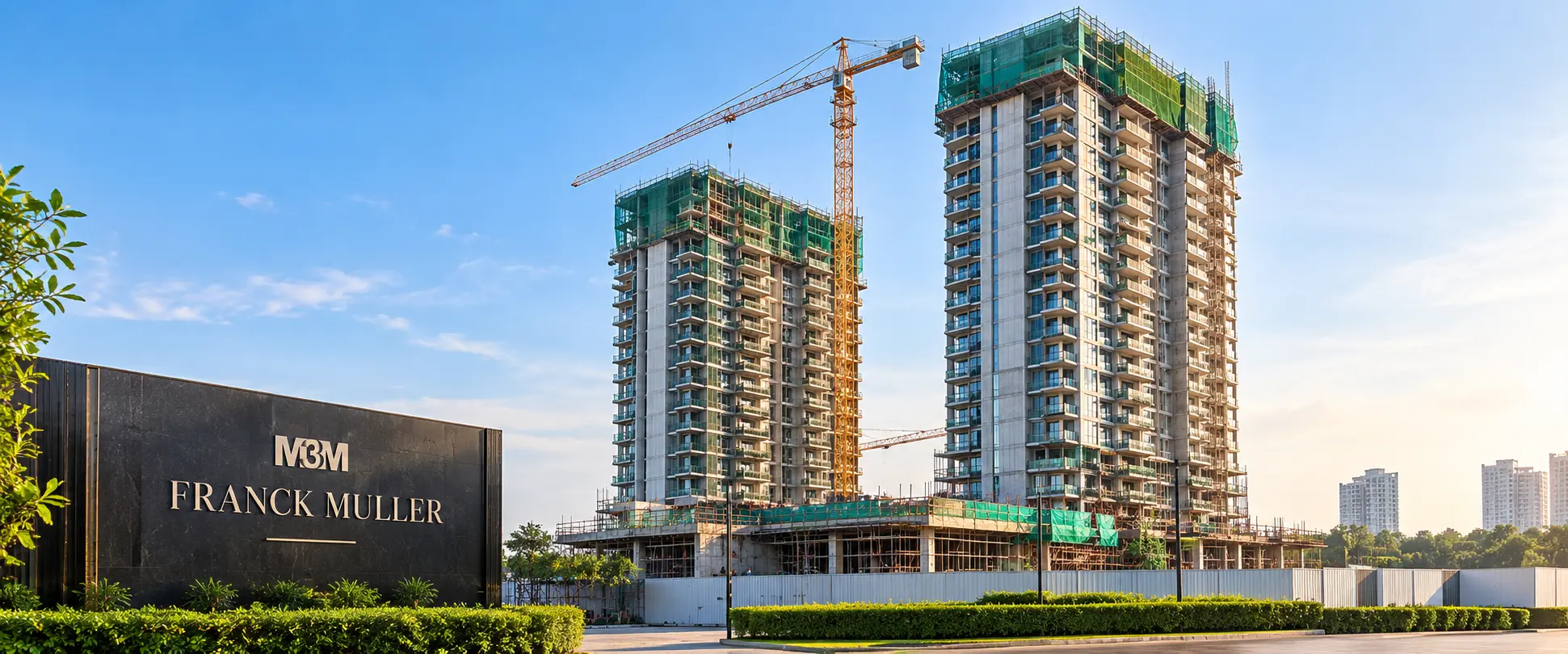
M3M Franck Muller Construction Update: What's ...

M3M Franck Muller Location and Connectivity: Secto...

M3M Capital Payment Plan (2026): What You Actually...

M3M Diwali Offers 2026: New Payment Plans, Interna...

 Sector 113, Gurugram, Dwarka Expressway
 3.5 & 4.5 BHK Luxury Boutique floors
 2730 Sq.ft
 6 Cr*
 Sector-9, Manesar, Gurugram 2.5, 3 & 4 BHK Luxury Apartments 1,080 sq. ft 2.10 Cr*

 Section - M9, M10 & M11, Manesar 2.5, 3.5 & 4.5 BHK 1450 sq. ft 2.50 Cr*

 Sumit Chauhan / Real Estate Consultant