You've worked hard for 10, 15, maybe 20 years abroad. Every month, a portion of your salary has quietly been sitting in an NRE savings account, earning near-zero interest — while India's real estate market has delivered 12–18% returns in premium corridors like Gurgaon, Whitefield, and Hyderabad's HITECH City.
Here's what no one tells NRIs plainly: India is one of the best emerging-market real estate plays in the world right now. With a weak rupee, a rapidly urbanizing middle class, and a government actively courting NRI investment, 2026 is arguably the most favorable year in the last decade to buy property in India.
But the legal and taxation landscape can be intimidating. FEMA regulations, Section 195 TDS, repatriation rules, DTAA treaties — the jargon alone stops most NRIs from ever pulling the trigger.
This guide changes that. We've condensed everything — the legal rules, taxation, best locations, step-by-step buying process, and hard ROI data — into one actionable playbook. Whether you're in Dubai, New Jersey, London, or Singapore, this is the only NRI property investment guide you'll need in 2026.
A Non-Resident Indian (NRI) is an Indian citizen who resides outside India for more than 182 days in a financial year for purposes of employment, business, or any other vocation indicating an intent to stay abroad indefinitely.
This definition is governed by FEMA (Foreign Exchange Management Act, 1999) — not just the Income Tax Act. Why does this matter? Because your investment rights depend on your FEMA status, not just your tax residency status.
| Category | Who They Are | Can Buy Residential? | Can Buy Commercial? | Can Buy Agricultural Land? |
| NRI | Indian citizen residing abroad >182 days/year | YES | YES | NO |
| OCI (Overseas Citizen of India) | Foreign national of Indian origin with OCI card | YES | YES | NO |
| PIO (Person of Indian Origin) | Foreign national with Indian-origin parents/grandparents | YES (with RBI permission) | YES (with RBI permission) | NO |
| Foreign National | No Indian connection | NO | NO | NO |
Pro Tip
OCI cardholders now have nearly identical property rights as NRIs after the 2015 amendment. If you hold an OCI card, you do NOT need RBI approval for residential or commercial property purchases.

Properties NRIs CAN Buy (No RBI Permission Required)
⦁ Residential properties — apartments, villas, bungalows, plotted developments
⦁ Commercial properties — office spaces, retail shops, warehouses
⦁ Any number of properties — there is NO cap on the number of properties an NRI can own in India
⦁ Under-construction projects from RERA-registered developers
⦁ Properties via gift or inheritance from residents or NRIs
⦁ Agricultural land, plantation property, or farmhouses — these require specific RBI approval which is rarely granted to NRIs
⦁ Exception: Property inherited from a family member, or gifted by a resident Indian relative, is allowed
The fundamental framework under FEMA 1999 remains intact, but here are key compliance points NRIs must note in 2026:
1. All payments for property purchase must be routed through NRE (Non-Resident External) or NRO (Non-Resident Ordinary) accounts, or via foreign inward remittance. Cash payments are strictly prohibited.
2. There is no requirement to report the purchase to the RBI — but sale of property and repatriation of proceeds are subject to limits (detailed in the Taxation section below).
3. Home loan EMIs can be paid via NRE/NRO accounts or by close relatives in India on your behalf.
4. The property must be registered in your name (or jointly) — benami transactions are illegal and subject to strict penalties under the Benami Transactions (Prohibition) Act.
This is the #1 area of confusion for NRI sellers. When an NRI sells property in India, the buyer is legally required to deduct TDS (Tax Deducted at Source) before making payment.
| Property Type | TDS Rate on Sale Value | Plus Surcharge & Cess |
| Short-term capital gain (held <2 years) | 30% on gain (buyer deducts at 30%) | Surcharge + 4% cess = ~33–36% |
| Long-term capital gain (held >2 years) | 12.5% on indexed gain | Surcharge + 4% cess = ~13–14% |
| Where no gain (selling at loss) | Can apply for lower deduction certificate from AO | Form 13 — submit before sale |
IMPORTANT: As a buyer of an NRI's property, you must deduct TDS at the applicable rate on the TOTAL SALE VALUE (not profit), unless the NRI seller obtains a lower TDS certificate from the Income Tax department.
| Gain Type | Holding Period | Tax Rate | Indexation Benefit? |
| Short-Term Capital Gain (STCG) | Less than 24 months | As per income slab (up to 30%) | No |
| Long-Term Capital Gain (LTCG) | 24 months or more | 12.5% (post Budget 2024) | No (indexation removed for properties) |
| Reinvestment Exemption (Sec 54) | Buy new residential property | Exemption on LTCG amount | Must be done within 2 years of sale |
| Reinvestment in Bonds (Sec 54EC) | NHAI / REC bonds | Up to Rs 50 lakh exemption | Within 6 months of sale |
If you earn rental income from your Indian property, it is taxable in India under 'Income from House Property.' Key rules:
⦁ TDS of 30% is deducted by the tenant (if the tenant is aware of your NRI status)
⦁ Standard deduction of 30% of net annual value is allowed
⦁ Home loan interest is fully deductible against rental income
⦁ Filing of Indian ITR is mandatory if total Indian income exceeds Rs 2.5 lakh
⦁ Rental income is also reportable in your country of residence (DTAA determines credit for taxes paid)
India has Double Taxation Avoidance Agreements (DTAA) with 90+ countries. This means if you pay tax in India on rental or capital gain income, you can claim a tax credit in your country of residence.
| Country | DTAA with India? | Key Benefit for NRI Investors |
| USA | Yes | Tax credit for India taxes paid; Form 1116 in US return |
| UAE | Yes (limited) | UAE has no income tax — India tax is final; no double issue |
| UK | Yes | Tax credit available; India LTCG taxed at lower rate than UK |
| Singapore | Yes | Beneficial capital gains treatment; no Singapore tax on India property gains |
| Canada | Yes | Tax credit mechanism; report on T1 return |
| Australia | Yes | Tax credit available; CGT discount may apply in AU |
Expert Insight
UAE NRIs have the highest tax advantage: since UAE levies zero personal income tax, all taxes paid in India on rental income or capital gains are the ONLY tax burden. This makes Indian real estate particularly attractive for UAE-based NRIs.
After selling your property in India, how do you get the money out? Here's the repatriation framework:
⦁ If the property was purchased with funds from NRE account or foreign remittance: You can repatriate the sale proceeds (up to the original investment amount) without RBI approval
⦁ Repatriation cap: USD 1 million per financial year per NRI (from NRO account)
⦁ Capital gains can be repatriated after paying applicable taxes
⦁ Required documents: Form 15CA and 15CB (chartered accountant certificate) before repatriating
⦁ NRE account transfers: Principal can be freely repatriated; NRO has the USD 1 million cap
Gurgaon has emerged as India's most sophisticated real estate market — and NRIs from UAE, USA, and UK have been among the most active buyers in premium corridors since 2022. Here's why Gurgaon stands apart:
⦁ Golf Course Road Extension & Dwarka Expressway: 2024-26's biggest infrastructure transformation
⦁ Premium residential pricing: Rs 12,000 – Rs 35,000/sq ft in key micro-markets
⦁ Rental yields: 3.5% – 5.2% in Golf Course Road, Sohna Road, and Dwarka Expressway corridors
⦁ Capital appreciation: 18–25% in 2023–2025 in luxury segments (Rs 4 crore+)
⦁ Tenant profile: CXOs, expats, MNC employees — ensuring consistent, high-quality tenancy
⦁ RERA compliance: Haryana RERA is among India's most active — offering strong buyer protection
⦁ NRI-friendly developers: DLF, M3M, Sobha, Godrej, Central Park — all have dedicated NRI desks
| Micro-Market | Price Range (Rs/sq ft) | Rental Yield | Best For |
| Golf Course Road | 35 – 50K | 4.2% – 5.0% | Luxury apartments, high rental demand |
| Dwarka Expressway | 20 – 25K | 3.8% – 4.5% | Mid-premium, strong appreciation potential |
| Sohna Road | 20 – 25K | 3.5% – 4.2% | Value investment, growing infrastructure |
| New Gurgaon (Sectors 82-95) | 15 – 18K | 3.0% – 3.8% | Long-term capital appreciation play |
| Golf Course Ext. Road | 20 – 35K | 4.0% – 4.8% | Balanced premium — best entry for NRIs |
⦁ Whitefield, Sarjapur Road, Hebbal — India's strongest tech-tenant demand
⦁ Rental yields: 4% – 6% (among the highest in India for residential)
⦁ Price range: Rs 7,000 – Rs 22,000/sq ft
⦁ Best for NRIs: Stable rental income from tech company employees
⦁ Caution: Flooding risk in some areas; verify BBMP approval
⦁ HITECH City, Gachibowli, Kokapet — India's fastest-appreciating real estate market 2023-25
⦁ Price range: Rs 6,000 – Rs 16,000/sq ft — significantly more affordable than Gurgaon/Mumbai
⦁ Rental yields: 3.5% – 4.5%
⦁ Capital appreciation: 22–28% in premium corridors over 2022–2025
⦁ Best for NRIs: High appreciation + value entry point — the 'buy early' market
| City | Avg Price (Rs/sq ft) | Rental Yield | 2Y Appreciation | NRI Demand Level | Best Entry Budget |
| Gurgaon | 12,000 – 35,000 | 3.5% – 5.2% | 18–25% | VERY HIGH | Rs 1.5 – 5 Cr+ |
| Bangalore | 7,000 – 22,000 | 4.0% – 6.0% | 14–20% | HIGH | Rs 80L – 3 Cr |
| Hyderabad | 6,000 – 16,000 | 3.5% – 4.5% | 22–28% | HIGH | Rs 60L – 2 Cr |
| Pune | 6,500 – 14,000 | 3.0% – 4.2% | 12–16% | MEDIUM-HIGH | Rs 70L – 2 Cr |
| Mumbai | 15,000 – 60,000 | 2.5% – 3.5% | 8–14% | HIGH | Rs 2 Cr+ |
⦁ Capital appreciation play → Under-construction premium project in growth corridors (Dwarka Expressway, Whitefield)
⦁ Rental income play → Ready-to-move apartment in established corporate hubs (Golf Course Road, Gachibowli)
⦁ Retirement home → Gated community with amenities in Gurgaon, Pune, or Bangalore suburbs
⦁ Set your budget in INR, factoring in: property price + stamp duty (4–7%) + registration (1%) + GST if under-construction (5% on affordable, 12% on others)
⦁ NRE Account: Funds from foreign earnings, freely repatriable — ideal for property purchase
⦁ NRO Account: Funds from India income (rent, dividends) — repatriation subject to USD 1M/year cap
⦁ Foreign inward remittance: Direct transfer from abroad to developer/seller — also permitted
⦁ NO cash transactions — 100% payments must be through banking channels
⦁ For home loans: Both NRE and NRO accounts can service EMIs
Never skip this. NRIs are frequent targets of fraudulent developers and brokers because remote buyers can't easily verify on ground. Here's your due diligence checklist:
⦁ Verify RERA registration at your state's RERA portal (for example, haryanarera.gov.in for Gurgaon)
⦁ Check title documents: Sale deed, chain of title (minimum 30 years), encumbrance certificate
⦁ Verify occupancy certificate (OC) for completed properties
⦁ Check for pending litigation — search district court records or hire a local property lawyer
⦁ Validate developer's track record: Past project delivery timelines, quality, homebuyer complaints
⦁ Get the sale agreement reviewed by an independent Indian property lawyer before signing
⦁ Sale Agreement (Agreement to Sell): Signed once terms are agreed; typically 10-20% advance paid
⦁ If buying remotely: A registered Power of Attorney (POA) holder in India can sign on your behalf
⦁ Get the agreement notarized and, ideally, registered with the sub-registrar's office
⦁ Ensure all payment milestones, possession timelines, and penalty clauses are clearly documented
⦁ Property must be registered at the sub-registrar's office in the locality where it's situated
⦁ Stamp duty rates: Varies by state — typically 4–7% of circle rate or transaction value (whichever is higher)
⦁ Registration fee: Usually 1% of transaction value
⦁ For NRIs signing remotely: POA holder can register on your behalf with a duly notarized and apostilled POA
⦁ Gurgaon stamp duty 2026: 7% for men; 5% for women buyers — this alone saves Rs 3–8 lakh on a typical transaction
A Power of Attorney allows you to authorize a trusted person in India (family member, lawyer) to execute all property-related transactions on your behalf. This is particularly important for NRIs who cannot travel frequently.
⦁ Type: A General POA covers all transactions; a Specific POA covers only the specific property being bought
⦁ Process: Draft POA, get it notarized in your country of residence, get it apostilled, then have it registered at the sub-registrar's office in India
⦁ Valid until: Specify an expiry date; an open-ended POA can be misused
⦁ Caution: Only give POA to someone you absolutely trust — it grants them significant legal powers
⦁ Valid Indian Passport (or OCI card)
⦁ Visa or work permit (to establish NRI status)
⦁ PAN Card (mandatory for property purchase above Rs 50 lakh; also for TDS purposes)
⦁ NRE/NRO bank account statements (last 6 months)
⦁ Foreign bank account statements (for fund trail)
⦁ Overseas address proof — utility bill, bank statement, or driver's license
⦁ Recent passport-size photographs
⦁ POA document (if buying remotely, notarized and apostilled)
⦁ Title deed / Sale deed (current and historical chain for 30 years)
⦁ Encumbrance certificate (to verify no existing mortgage or legal claim)
⦁ Occupancy Certificate / Completion Certificate (for ready property)
⦁ RERA registration certificate and project details
⦁ Approved building plan
⦁ No-objection certificates (NOCs) from relevant authorities
⦁ Property tax receipts (up to date)
⦁ Society/association NOC (for resale apartments)
| Parameter | Details |
| Eligible NRIs | Indian citizens working/living abroad; OCI cardholders with most banks |
| Loan Amount | Up to 80% of property value (LTV ratio varies by bank) |
| Interest Rate (2026) | 8.5% – 9.75% p.a. (floating); compare across lenders |
| Tenure | Up to 20-25 years; must be repaid before retirement age |
| Repayment Account | EMIs debited from NRE/NRO account or paid by co-borrower in India |
| Co-Borrower | Close relative in India can be a co-borrower — improves eligibility |
| Top NRI Lenders | SBI (SBI NRI Home Loan), HDFC, ICICI Bank, Axis Bank, PNB Housing Finance |
| Processing Time | 2–4 weeks after document submission (online applications available) |
Pro Tip: NRI home loan interest rates have come down from 2023 highs. Compare 3–4 lenders before finalizing. Even a 0.25% rate difference on a Rs 1.5 crore loan saves Rs 6–8 lakh over the loan tenure.
| Metric | Conservative | Expected | Optimistic |
| Property: Golf Course Ext. Road, 3BHK | 1,050 sq ft @ Rs 19,000/sqft | 1,050 sq ft @ Rs 19,000/sqft | 1,050 sq ft @ Rs 19,000/sqft |
| Investment Value | Rs 2.0 Cr | Rs 2.0 Cr | Rs 2.0 Cr |
| Annual Rental Yield | 3.5% = Rs 7L/year | 4.2% = Rs 8.4L/year | 5.0% = Rs 10L/year |
| 3-Year Capital Appreciation | 12% = Rs 24L | 20% = Rs 40L | 28% = Rs 56L |
| 3-Year Total Return (Rent + Capital) | Rs 45L (22.5%) | Rs 65.2L (32.6%) | Rs 86L (43%) |
| Annualised Return | ~7.2% | ~10.5% | ~13.5% |
Compared to: Typical NRE savings account returns ~5.5–6.5% per annum (no capital appreciation). Indian real estate in premium corridors has historically outperformed fixed-income alternatives while also providing rupee depreciation hedge for USD/AED/GBP-earning NRIs.
| Mistake | Why It Hurts | How to Avoid It |
| Buying from unregistered developer | Risk of project stalling, funds loss, no legal recourse | Check RERA registration before any payment |
| Skipping legal due diligence | Title disputes surface only after purchase — litigation can take years | Hire an independent property lawyer (not the developer's lawyer) |
| Not obtaining PAN Card | TDS cannot be credited; ITR filing is blocked | Apply for PAN before finalizing any property deal |
| Routing payments through cash or unofficial channels | FEMA violation — heavy penalties including property seizure | 100% banking channel payments from NRE/NRO only |
| Giving broad POA carelessly | POA holder can execute unauthorized transactions | Use specific POA with clear scope and expiry date |
| Ignoring TDS on NRI seller | Buyer becomes personally liable for unpaid TDS — even years later | Always deduct TDS under Section 195 when buying from NRI |
| Not filing Indian ITR with rental income | Penalty, interest, and prosecution risk under Income Tax Act | File ITR 2 annually if Indian income exceeds Rs 2.5 lakh |
| Choosing wrong property type for goal | Under-construction for rental income = 2-3 years of zero returns | Match property type (RTM vs UC) to your investment timeline |
| Underestimating total acquisition cost | Stamp duty, registration, GST, interiors — adds 15–20% to quoted price | Budget: Property price + 20% for all acquisition costs |
Q: Can NRI buy property in India without coming to India?
A: Yes. NRIs can complete the entire property purchase remotely using a registered Power of Attorney (POA). The POA holder (a trusted person in India) can sign documents, pay stamp duty, and register the property on the NRI's behalf. With RERA compliance and digital document verification tools, remote buying is safer than ever in 2026.
Q: What is TDS when NRI sells property in India?
A: When an NRI sells property in India, the buyer must deduct TDS (Tax Deducted at Source) under Section 195 of the Income Tax Act. For long-term capital gains (property held >2 years), TDS is 12.5% + surcharge + cess (total ~13-14%). For short-term gains, TDS is 30% + surcharge + cess. The NRI can apply for a lower TDS certificate (Form 13) from the Income Tax department if actual gains are lower.
Q: How many properties can an NRI own in India?
A: There is NO limit on the number of residential or commercial properties an NRI can own in India. NRIs can buy as many properties as they wish, funded through NRE/NRO accounts or foreign inward remittances. The restriction only applies to agricultural land, plantation property, and farmhouses.
Q: Which is the best city for NRI real estate investment in India in 2026?
A: For balanced returns (capital appreciation + rental yield), Gurgaon (particularly Golf Course Extension Road and Dwarka Expressway) leads NRI investment preferences in 2026. For pure rental yield, Bangalore's IT corridors offer 4–6% returns. For value investment with high appreciation potential, Hyderabad's Gachibowli-Kokapet corridor offers the best entry pricing with strong upside.
Q: Can NRIs repatriate money from sale of property in India?
A: Yes. NRIs can repatriate up to USD 1 million per financial year from their NRO account (which includes property sale proceeds). If the property was originally purchased with NRE funds or foreign remittances, the principal amount can be repatriated without this limit. Form 15CA and Form 15CB from a Chartered Accountant are required before any repatriation.
Q: Do NRIs need to file ITR in India if they have rental income?
A: Yes. If an NRI's total income earned in India (including rental income, capital gains, interest) exceeds Rs 2.5 lakh in a financial year, filing an Indian Income Tax Return (ITR-2) is mandatory. Failure to file can result in penalties, interest on unpaid tax, and potential prosecution under the Income Tax Act.

Pre-Leased Shops in M3M Projects, Gurgaon: Rental ...

Pre-Leased Commercial Property in Gurgaon: Rental ...
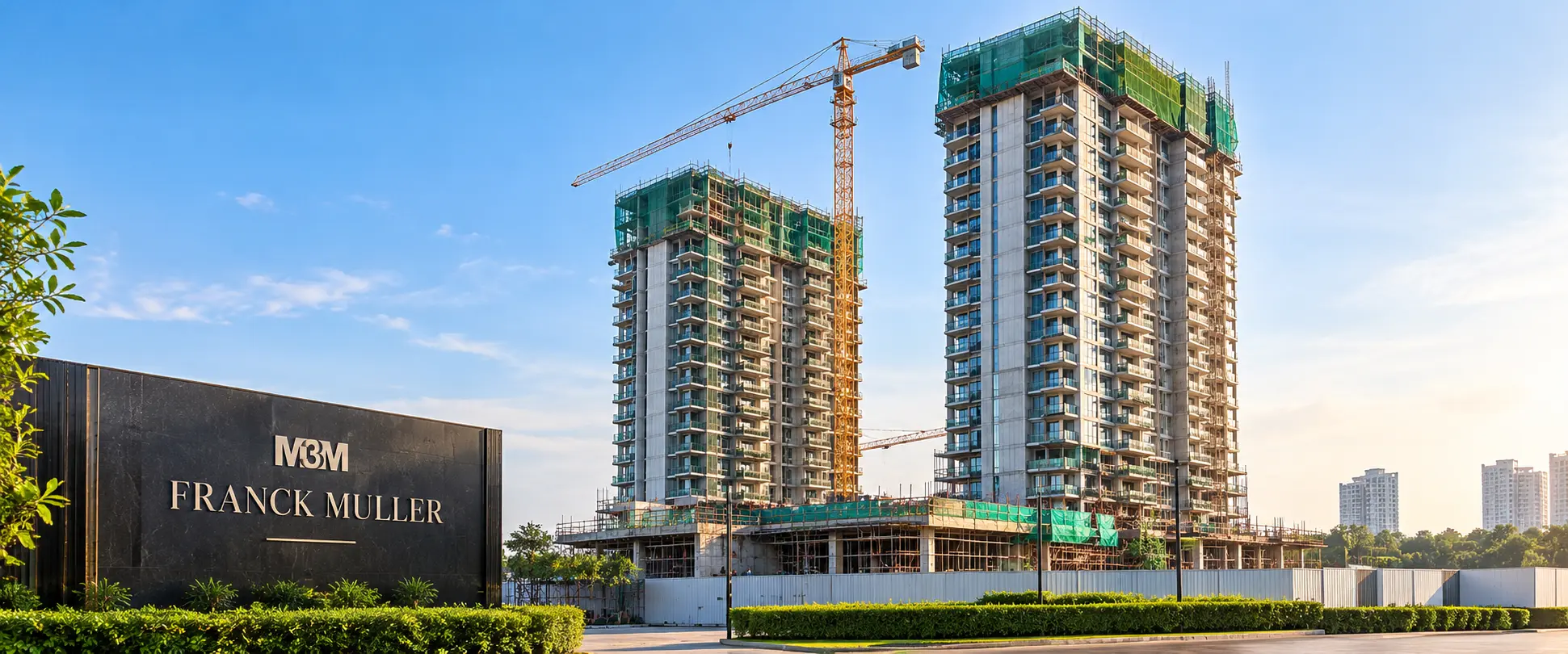
M3M Franck Muller Construction Update: What's ...

M3M Franck Muller Location and Connectivity: Secto...

M3M Capital Payment Plan (2026): What You Actually...

M3M Diwali Offers 2026: New Payment Plans, Interna...

 Panipat Sector 36 & 37 (Kabri)
  4 BHK & 5 BHK
  4,800 sq. ft.
  ON REQUEST
  Sector 67 Gurugram Luxury Apartments 2,398 sq. ft. 5.76 Cr*
  Sector 43, Golf Course Road, Gurugram 4 BHK, 5 BHK 5500 sq.ft. 25 Cr*
  Sector 36 & 37, Panipat 125 sq. yd. – 1,000 sq. yd. 125 – 180 sq. yd. 1.30 Lakh/sq. yd.
 Sumit Chauhan / Real Estate Consultant